Home Health
Skilled Home Health vs Personal Care: What Medicare Pays For and What It Does Not
Medicare home health pays for skilled care at home: nursing and therapy under a doctor's plan. It does not pay for personal care alone. See where the line falls.
Key takeaways
- Medicare home health covers part-time or short-term skilled care at home: skilled nursing, physical therapy, occupational therapy, and speech therapy, plus medical social services.
- You must be homebound, and a doctor must order the care and set the plan. A face-to-face visit with the doctor or an allowed provider starts the process.
- You pay $0 for covered home health services (Ledger A13). For durable medical equipment tied to the care, you pay 20 percent of the Medicare-approved amount, and the Part B deductible applies (Ledger A13, A16).
- Medicare does not cover 24-hour care at home, meals delivered to the home, homemaker services not tied to your care plan, or personal care when it is the only care you need.
- A home health aide can help with bathing and dressing under Medicare only when you also get skilled care, and only on a part-time basis.
- Personal care on its own is most often private pay. CareScout's Cost of Care Survey 2025 puts the national median rate for in-home non-medical care at $35 per hour (Ledger F1).
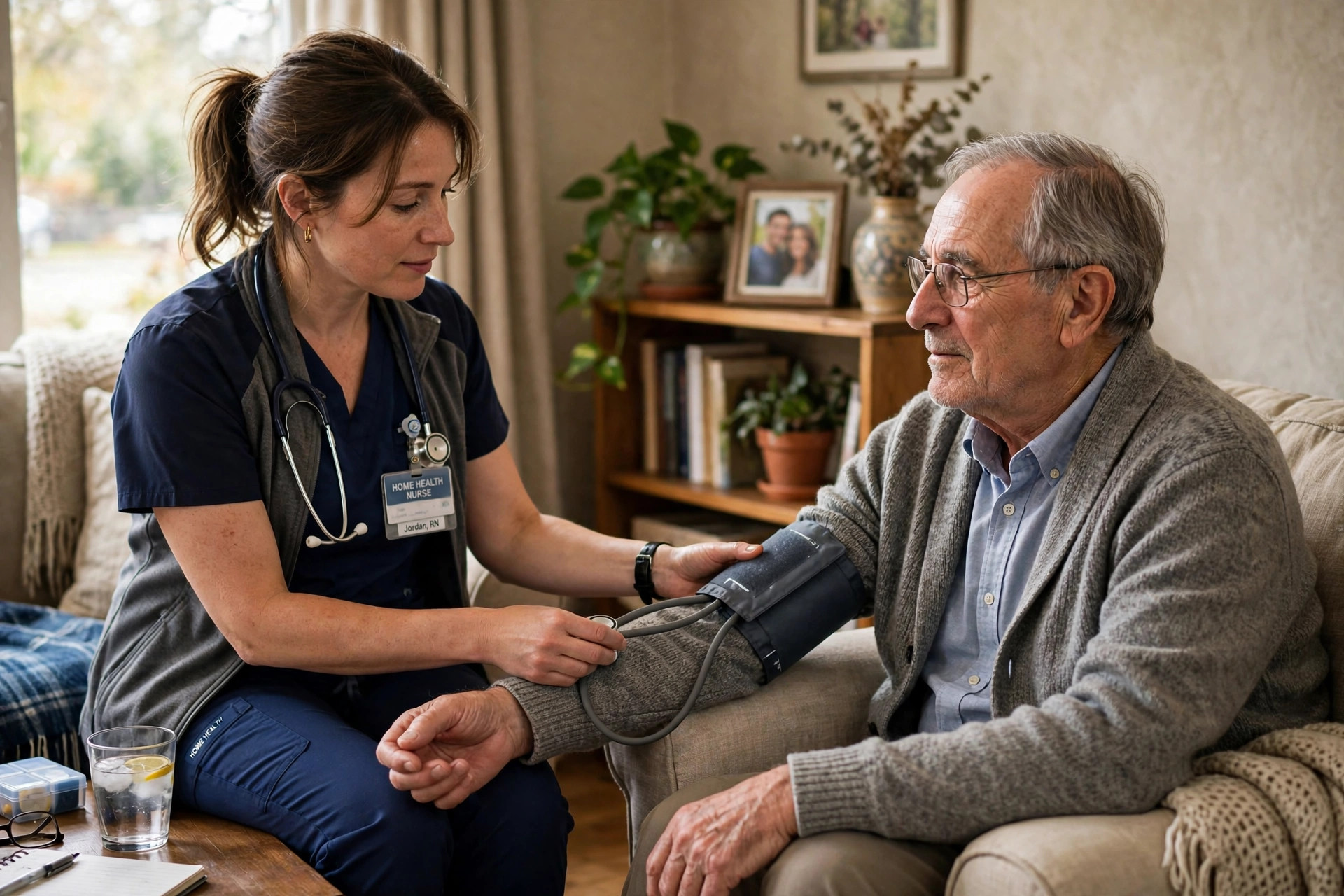
A home health aide helps your mother with a bath. A nurse checks her wound. Both come to the house. Families often assume Medicare pays for both in the same way. It does not. Medicare home health is a skilled care benefit. It pays for nursing and therapy at home, under a doctor's plan, for a person who is homebound. Personal care is help with daily tasks: bathing, dressing, meals, and house work. Medicare pays for that kind of help only in a narrow case, and only for a short time. Most personal care at home is paid by the family, by Medicaid, or by a long-term care policy. This guide draws the line as Medicare draws it, so a denial letter does not come as a shock. Our /home-health/ hub holds more guides on care at home, and our carried guide on home care vs home health sets the two side by side.
The two kinds of help at home
Skilled care is care that takes a nurse's or a therapist's training. A nurse changes a wound dressing, gives shots, or teaches you to care for a new condition. A physical therapist helps you walk safely after a fall or a surgery. An occupational therapist helps you relearn daily tasks. A speech therapist helps with speech or swallowing after a stroke. This is the care Medicare home health was built to pay for.
Personal care is help with the tasks of daily life. An aide helps you bathe, dress, eat, and move around the house. A homemaker cooks, cleans, and does laundry. This help can be the thing that keeps a person at home. But it is not skilled care, and Medicare treats it in a distinct way.
One worker can give both kinds of help in one visit. The label on the worker does not decide what Medicare pays. The kind of care in the plan decides it.
What Medicare home health covers
Medicare covers home health services when all of these are true:
Covered services can include part-time skilled nursing, physical therapy, occupational therapy, speech therapy, and medical social services. A part-time home health aide can be covered too, but only while you also get skilled care. The aide's help rides on the skilled plan. It does not stand on its own.
The cost side is kind, for the care that is covered. You pay $0 for covered home health services (Ledger A13). If you need durable medical equipment, such as a wheelchair or a hospital bed, you pay 20 percent of the Medicare-approved amount, and the Part B deductible applies (Ledger A13). That 20 percent is the standard Part B coinsurance rate after the deductible (Ledger A16).
Our guide on the face-to-face encounter shows the visit that starts coverage and who can do it. Read it if an agency asks you to set that visit up.
- You are homebound. Leaving home takes a great effort, and you leave only for medical care or short trips.
- You need part-time or short-term skilled care: skilled nursing, or therapy, on a part-time basis.
- A doctor or an allowed provider has had a face-to-face visit with you and orders the care.
- The care is given by a Medicare-certified home health agency under a plan your doctor reviews.
What Medicare does not pay for
Medicare.gov lists the main gaps directly. Medicare does not cover:
That last line is the one that trips families. An aide's bath help is covered for a few weeks while a nurse also comes. The same bath help, with no skilled need left, is not covered at all. When the skilled need ends, the aide visits end with it. The agency is not being cruel when it says so. It is reading the same rule book.
Medicare Advantage plans must cover home health too. They can use their own networks and approval steps. The skilled-care line is the same: personal care alone is not a covered benefit in those plans either.
- 24-hour care at home.
- Meals delivered to your home.
- Homemaker services, such as shopping, cleaning, and laundry, when they are not tied to your care plan.
- Personal care, such as bathing, dressing, and eating help, when it is the only care you need.
Who pays for personal care, then?
- You and your family, most of the time. Private pay is the main route. At the national median rate of $35 per hour for in-home non-medical care (Ledger F1, CareScout Cost of Care Survey 2025), ten hours a week runs about $1,517 a month. Your local rate can sit above or below the median.
- Medicaid. State Medicaid programs can pay for personal care at home for people who meet income and resource rules, often through home and community based waivers. The service list and the rules are the state's.
- A long-term care policy. If you hold one, it can pay for aide care at home once you meet its triggers and its waiting period. The contract sets the terms.
- Veterans' programs. The VA runs aide and homemaker programs for veterans who qualify. Ask the VA if this fits you.
- Medicare, in the narrow case only. Part-time aide help while skilled care is also in the plan, as set out above.
Who pays for what
- Original Medicare pays for covered home health services in full: you pay $0 for the services (Ledger A13). You pay 20 percent for durable medical equipment, with the Part B deductible (Ledger A13, A16).
- Medicare Advantage plans cover home health under the same skilled-care rules, through their own networks and steps.
- A Medigap policy pays toward costs Original Medicare leaves, such as the equipment coinsurance. It does not cover a service on its own, and it does not add personal care.
- Medicaid can pay for personal care at home for people who qualify under state rules.
- You and your family pay for personal care that no program covers, at your local agency rate. The $35 per hour figure in this guide is a national median (Ledger F1), not a price quote.
Sample situation
Grace is 79. She broke her hip and came home from the hospital last week. Her doctor orders home health. A nurse visits to check her wound and her meds. A physical therapist comes three times a week to help her walk. An aide helps her bathe on the days the nurse comes. Medicare covers the nurse, the therapist, and the aide visits, since the aide's help is part of a skilled plan. Grace pays $0 for those services (Ledger A13). Six weeks later, Grace walks well and the wound has healed. The skilled need ends. She still wants the aide's help with baths and meals. From that point, the aide is personal care alone. Medicare does not pay for it. Grace hires the aide for six hours a week at a local rate near the national median of $35 per hour (Ledger F1). The rule did not change. Her need changed, from skilled to personal, and the payer changed with it.
Ask which kind of care before you ask who pays
When an agency or a hospital worker talks about help at home, ask one question first: is this skilled care, personal care, or a mix? The answer tells you the payer. Skilled care at home, homebound, under a doctor's plan: Medicare. Personal care alone: your family, Medicaid, or a policy. Knowing the line early lets you plan the cost before the visits start. Our /home-health/ hub and the carried guide on home care vs home health can help you plan the mix.